
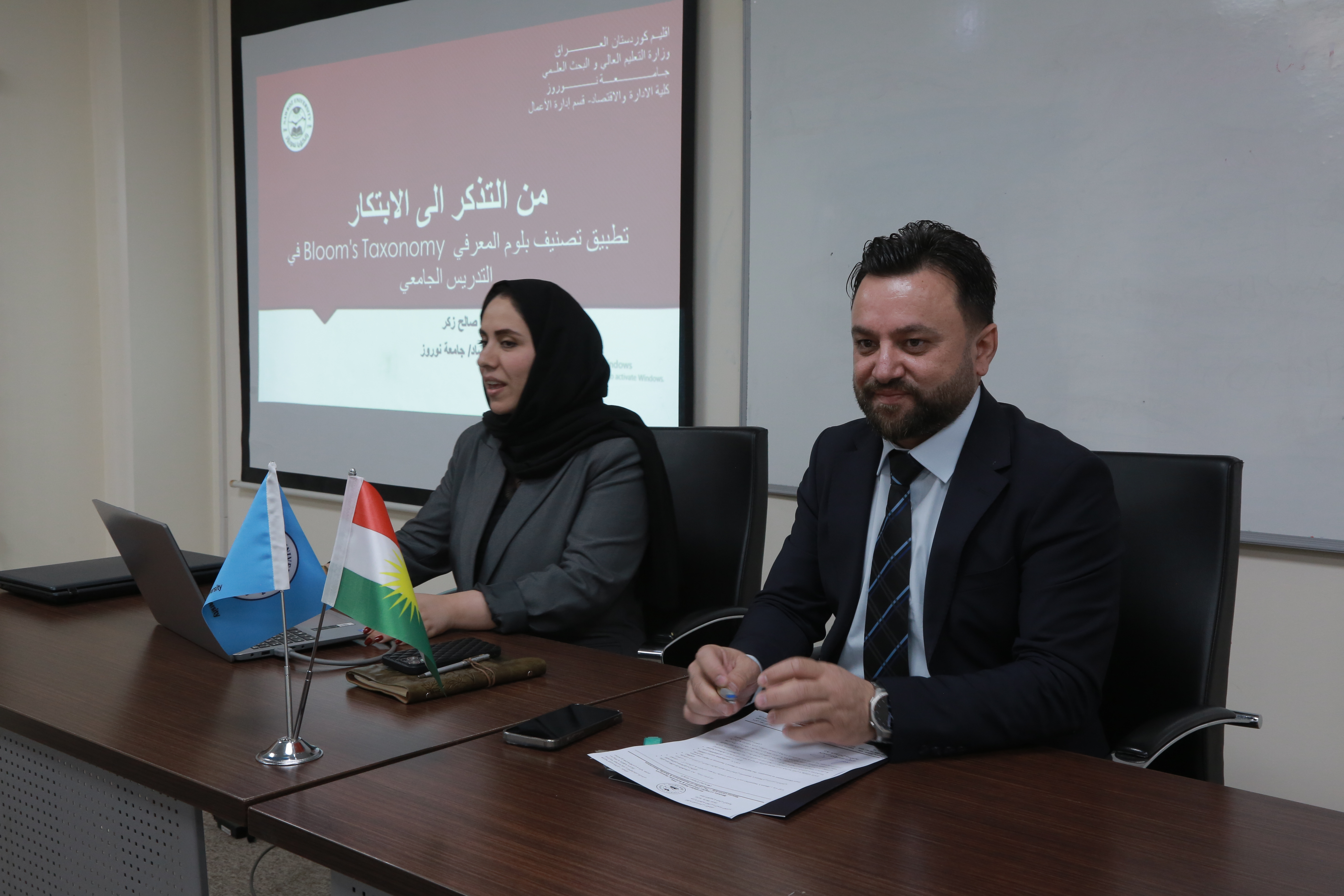
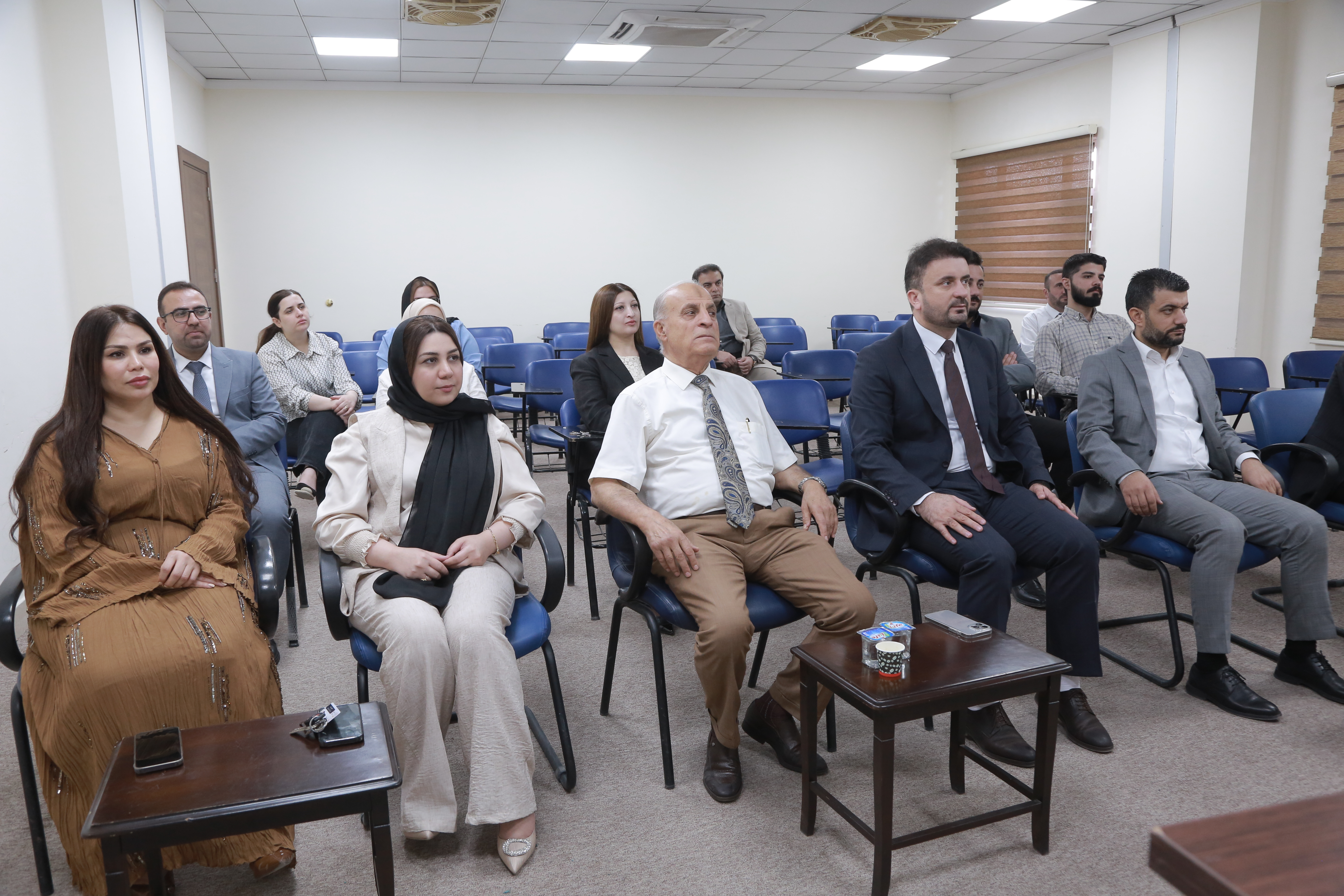

On October 7, 2025, the scientific seminar was held under the guidance of the business administration lecturer, (Assist. Lect. Rondik Salih Zekr) from the College of Administration and Economics, University of Nawroz, based on the cognitive taxonomy of learning outcomes, developed and classified the levels of learning from low to high, from simple “Knowledge” to the most complex one, “Evaluation” of Benjamin Bloom and his colleagues in 1956.
She emphasized that in 2001, after Bloom’s death, Anderson and Krathwohl updated the cognitive taxonomy of learning and simply grouped learning activities and objectives into two dimensions: “Knowledge” and “Cognitive Processes.” In addition, they replaced nouns with action verbs to define the levels of learning, such as “Remember,” “Understand,” “Apply,” “Analyze,” “Evaluate,” and “Create.”
As she mentioned while conducting the seminar, cognitive taxonomy could be used to formulate learning outcomes, plan classroom activity, and assess understanding of students at different levels. Moreover, she stated that in her experience, cognitive taxonomy was implemented in universities through active learning methods like team-based learning, fishbowl, peer assessment, project-based learning, and case study.

