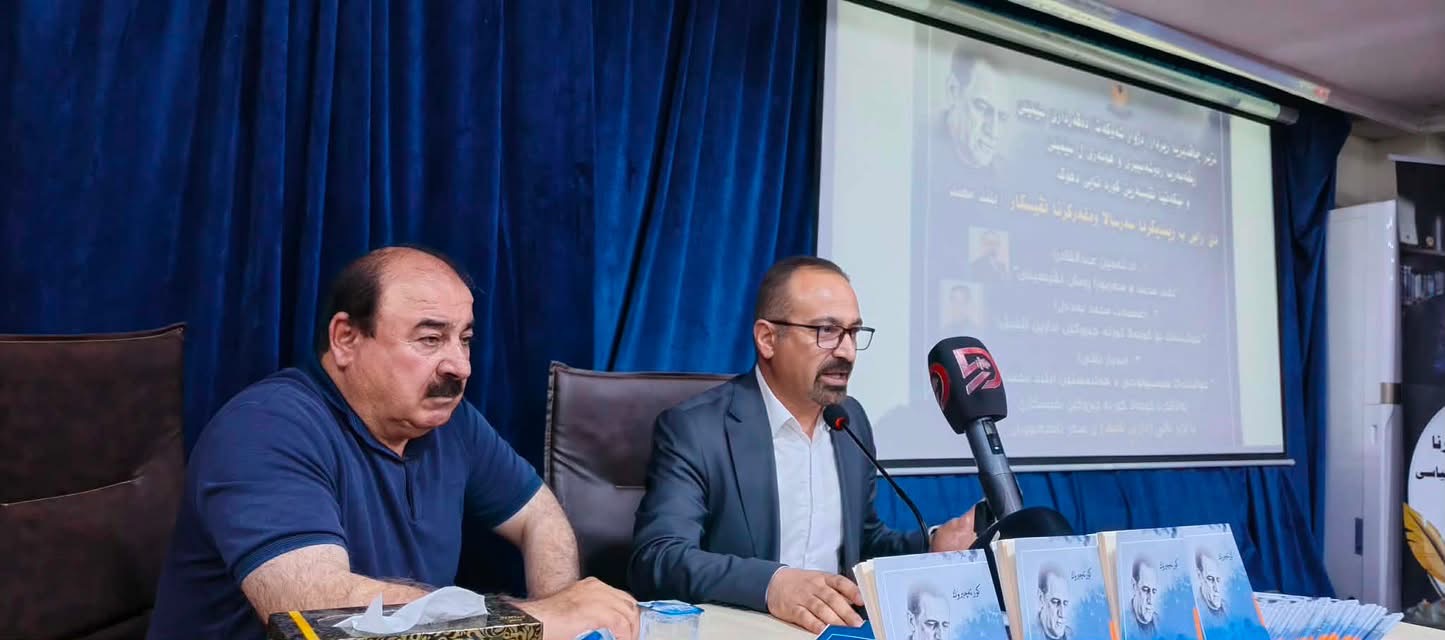
On Tuesday, July 14, 2026, at the Directorate of Culture and Art in Semel, the Dean of the College of Languages, Professor Dr. Ameen Abdulqader, delivered a seminar titled "Belind Muhamed and the Experience of Novel Writing." The event was held to commemorate the anniversary of the passing of the prominent local writer and political prisoner, Belind Muhamed.
Dr. Ameen shed light, in a detailed and academic manner, on the art of novel writing in Belind Muhamed's works, focusing particularly on his two novels: Sotingeh(2005) and Gehnom (2022).
Analysis of the Novel Sotingeh (2005)
Regarding the writing style of the late author Belind Muhamed, Dr. Ameen pointed out that Sotingeh was his debut novel, in which he successfully utilized cinematic techniques to a great extent. Most notably, the montage technique was extensively incorporated into structuring and building the textual framework of the novel, which is highly significant in modern novel writing. Furthermore, the writer created a protagonist out of his own imagination and lived experience to represent the cause of an oppressed nation. The other characters in Sotingehshowcase rich diversity, with provocative, dramatic secondary characters created to capture the reader's attention and further explore the psychological, intellectual, social, and ideological dimensions of the main character, Siyaband. By leaving certain aspects of the protagonist's life and fate shrouded in mystery, the author successfully fosters a role of curiosity in the reader, opening pathways for deeper reflection and contemplation. Ultimately, Dr. Ameen noted that while the primary theme of Sotingeh is the oppression and subjugation faced by the Kurdish people, social issues and gender inequality also occupy a significant portion of the narrative.
Analysis of the Novel Gehnom (2022)
Regarding the novel Gehnom, Dr. Ameen provided the following analysis:
"Gehnom by Belind Muhamed serves as a prominent portrayal of the marginalized human being. Using metaphorical language, the writer paints a picture of the lives of individuals who have been deprived of their basic rights and life opportunities due to poverty, disability, and a lack of identity."
Instead of featuring a strong, flawless hero, the protagonist of Gehnom is depicted as impoverished, powerless, and disabled. This choice was deliberately made to amplify and convey the voice of this forgotten and neglected segment of society.

